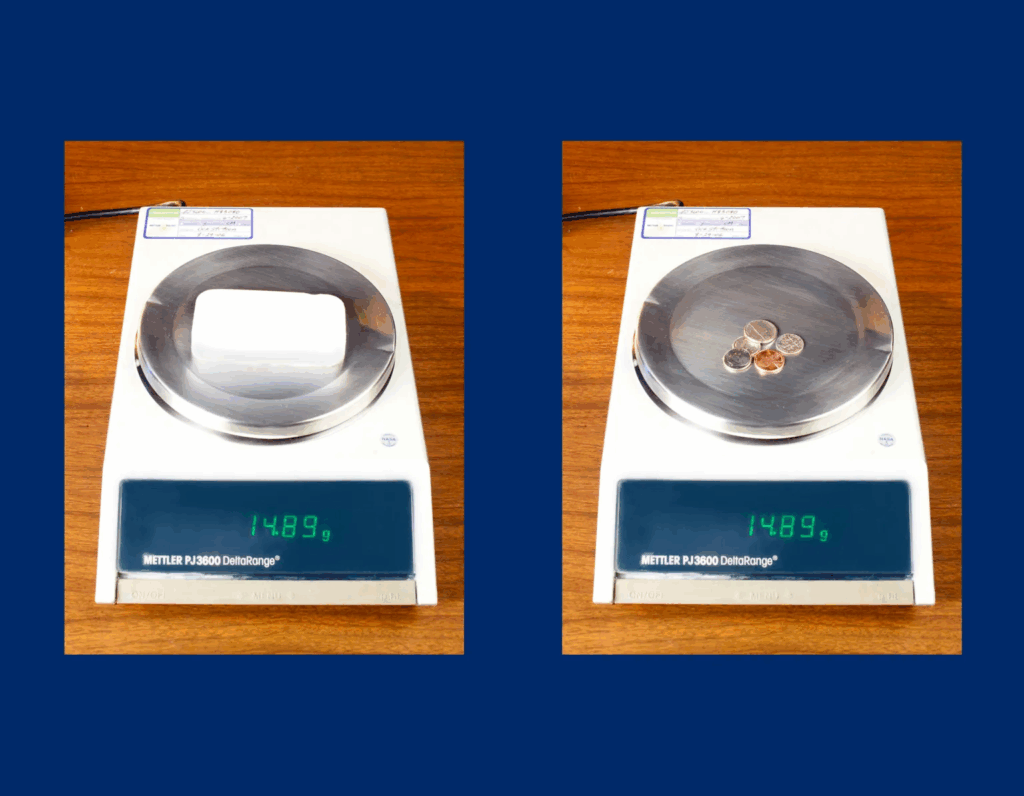
I was conducting some research on various materials, and was blown away by this particular material: aerogels. Aerogels are ultralight, porous materials made by removing the liquid from a gel and replacing it with gas/air without collapsing the gel’s solid structure. NASA described it best saying, “Picture preparing a bowl full of a sweet, gelatin dessert. The gelatin powder is mixed with hot water, and then the mixture is cooled in a refrigerator until it sets. It is now a gel. If that wiggly gel were placed in an oven and all of the moisture dried out of it, all that would be left would be a pile of powder. But imagine if the dried gelatin maintained its shape, even after the liquid had been removed. The structure of the gel would remain, but it would be extremely light due to low density. This is precisely how aerogels are made” (NASA).
Aerogels are some of the lightest solids known to mankind. Aerogels are formed by combining a polymer with a solvent to create a gel, then carefully removing the liquid and replacing it with air. The result is an extremely porous, low-density solid that feels firm to the touch. They are often referred to by the nickname “frozen smoke” coming from aerogels’ ghostly appearance and weightless feel. Despite looking fragile, they can support over a thousand times their weight. This translucent material is among the most effective thermal insulators known. These were first invented in the 1930s, however NASA’s Glenn Research Center in Cleveland has invented groundbreaking methods of creating new types of aerogels. NASA has taken aerogels further than anyone imagined, discovering endless possibilities for this incredible material.
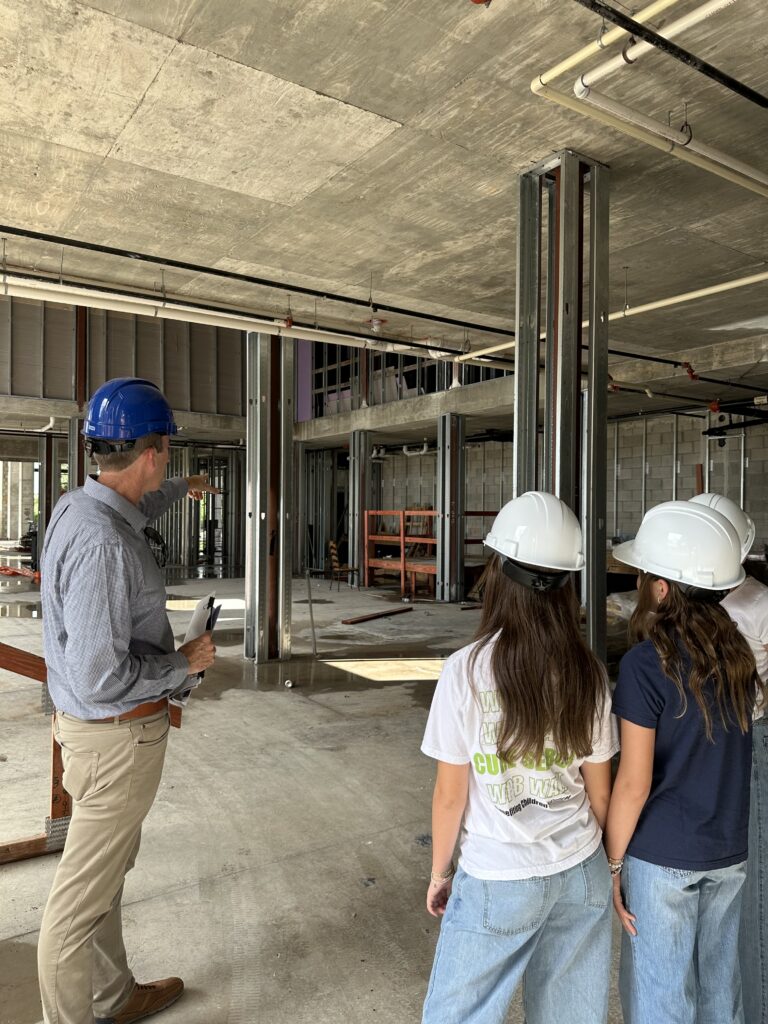
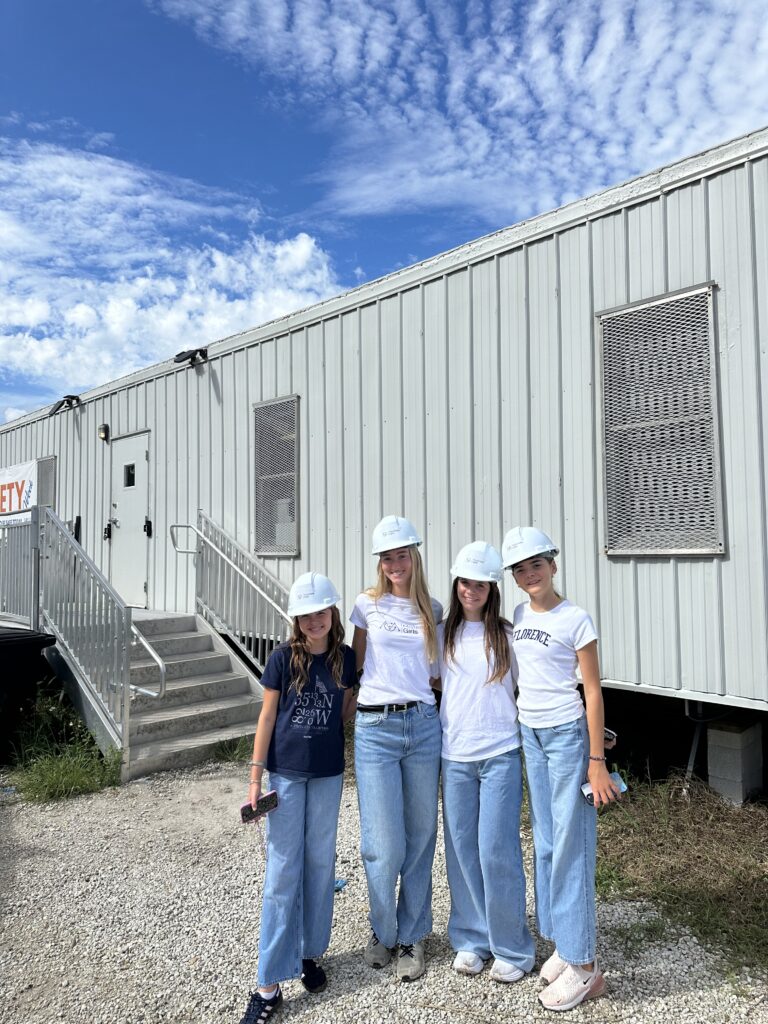
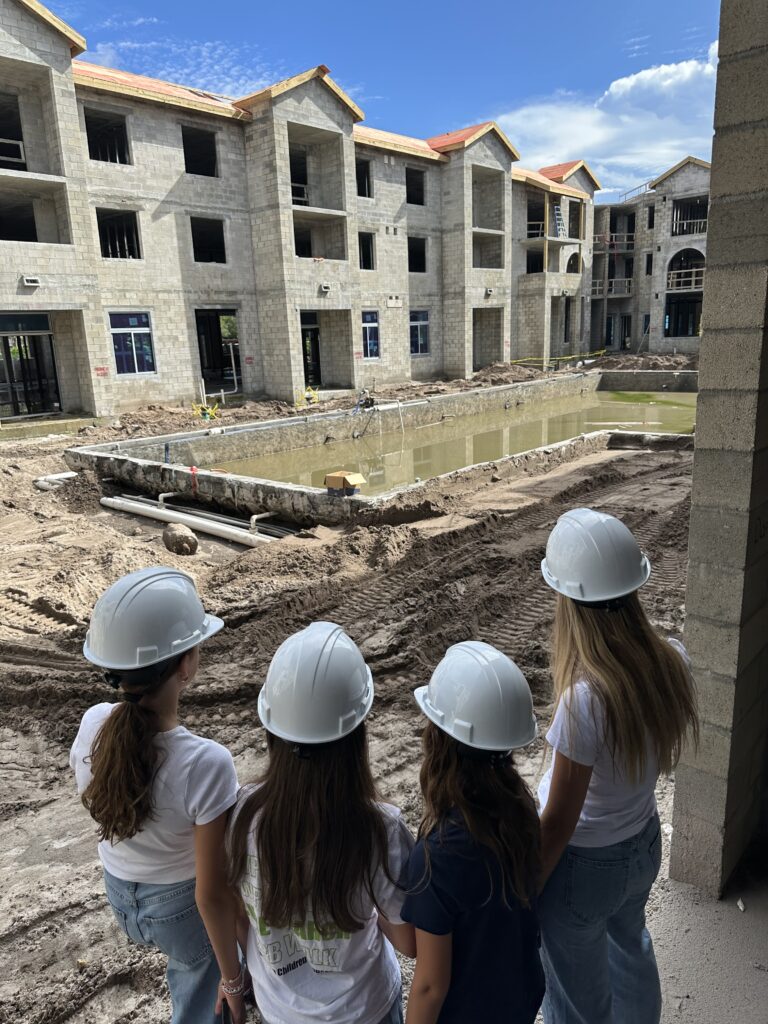
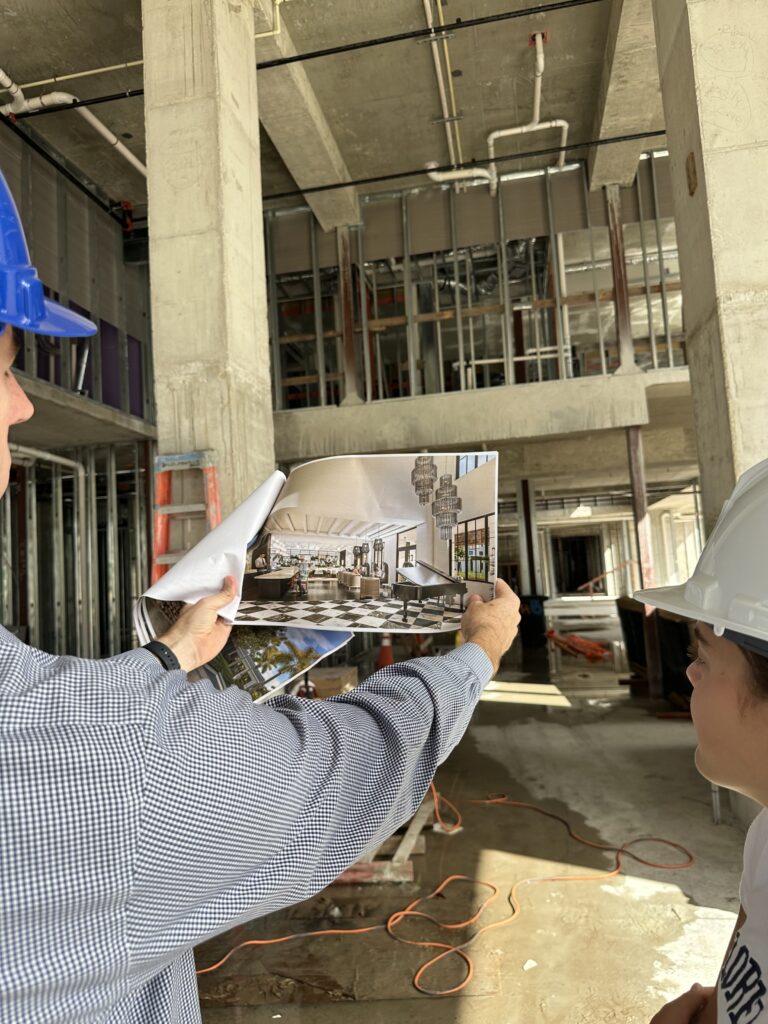
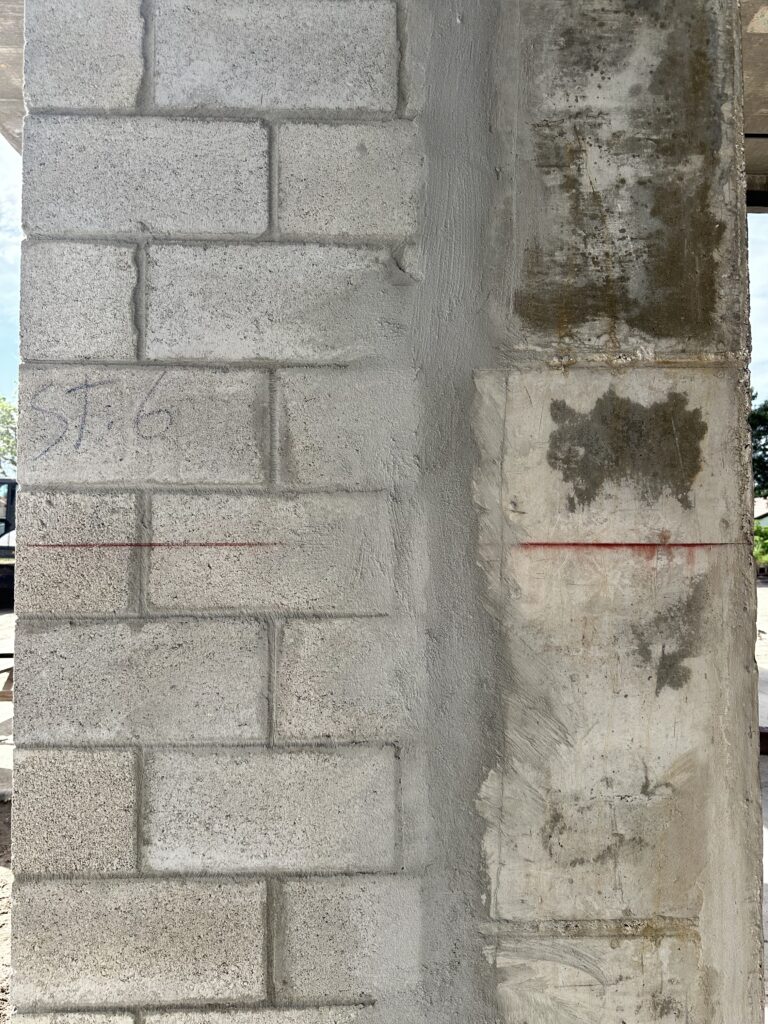
Today The Kolter Group hosted the Materials Girls in a tour of their apartment building construction site in Boynton Beach, FL. They walked us through the site, showing us the plans for the future of the building. Most importantly they talked about the materials necessary for the build, highlighting their main material: concrete.
East Coast vs. West Coast
On Florida’s east and west coasts, apartment construction reflects climate demands. Along the east coast, where hurricanes and high winds pose greater risks, concrete blocks and reinforced concrete structures are far more common because they provide strength, durability, and resistance to storm damage. In contrast, many west coast developments (particularly smaller, low-rise apartments) often rely on wood framing, which is less costly and quicker to build but more vulnerable to moisture, termites, and wind.
Florida’s east and west coasts experience different wind patterns that influence building design. On the east coast, strong Atlantic trade winds and frequent exposure to tropical storms and hurricanes bring higher wind speeds, so apartment buildings are often constructed with reinforced concrete to withstand the pressure and flying debris. The west coast, facing the calmer Gulf of Mexico, generally experiences lighter winds and fewer direct hurricane impacts, allowing more developments to use wood framing. These regional wind differences explain why concrete is mainly used on the east coast while wood structures remain more common on the west.
Part of my goal for Materials Girls was to act as the mentor for these young girls that I have found in other women before me. Women have continuously been influential forces in science and discovery. Today, I wanted to highlight some of the most impressive scientists who have led us to what we know about the world today and our rights in the world of innovation.
Sally Ride was the first American woman in space, making history aboard the Space Shuttle Challenger in 1983. A physicist as well as an astronaut, she flew on two missions and became a powerful role model for women in science. After her NASA career, she founded Sally Ride Science to inspire young students, especially girls, to pursue STEM fields.
Mae Jemison became the first African American woman in space when she flew aboard the Space Shuttle Endeavour in 1992. Trained as both a physician and an engineer, she combined her expertise in medicine and technology during her career. Since then, she has worked to promote STEM education, sustainable development, and innovation in science.
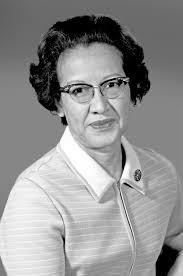
Katherine Johnson was a groundbreaking NASA mathematician whose calculations were essential to the success of many early U.S. spaceflights, including John Glenn’s orbital mission in 1962. She broke through racial and gender barriers, becoming one of the key figures behind America’s space program. Her story was later highlighted in the book and film Hidden Figures.
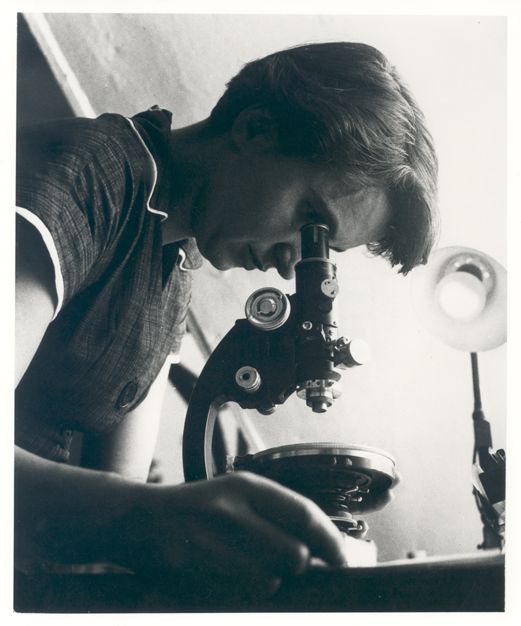
Rosalind Franklin was a chemist and X-ray crystallographer whose precise diffraction images revealed critical details of DNA’s structure, helping to uncover the double helix. Though her contributions were not fully recognized during her lifetime (and credit was given fully to Watson and Crick, at the time), her work remains fundamental to genetics. She also made significant advances in understanding viruses and coal.
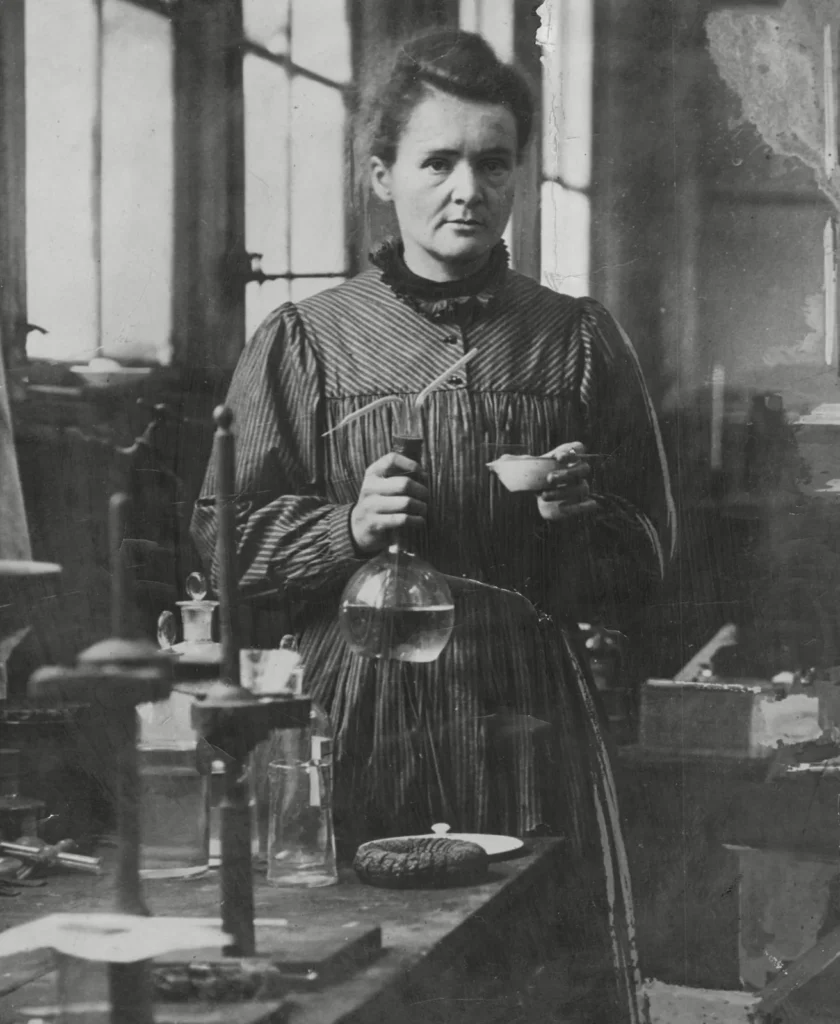
Marie Curie was a pioneering physicist and chemist who discovered the elements polonium and radium. She was the first woman to win a Nobel Prize and the only person ever to win in two scientific fields, Physics and Chemistry. Her research on radioactivity transformed science and laid the groundwork for medical and nuclear applications
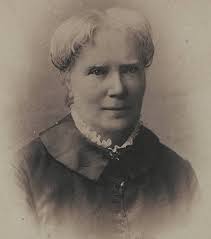
Elizabeth Blackwell was the first woman in the United States to earn a medical degree, graduating in 1849. She went on to advocate for women in medicine and co-founded a medical college for women, expanding opportunities in the field. She also promoted public health, hygiene, and preventive medicine throughout her career.
These women remind us that breaking barriers in science is about discovery and paving the way for others to follow. Their stories show the power of persistence, passion, and courage in shaping both knowledge and opportunity. Through Materials Girls, I hope to continue this legacy, encouraging young girls to see themselves in these role models, and hopefully in me.
Conlon, Anne Marie. “Mae Jemison.” New Scientist, 17 Oct. 1956, www.newscientist.com/people/mae-jemison/.
“Dr. Elizabeth Blackwell Biography | Hobart and William Smith Colleges.” Hws.edu, 17 Jan. 2024, www.hws.edu/about/history/elizabeth-blackwell/biography.aspx. Accessed 19 Sept. 2025.
“New Evidence Supports the Rosalind Franklin Phenomenon – AWIS.” AWIS, 23 May 2024, awis.org/resource/new-evidence-supports-rosalind-franklin-phenomenon/.
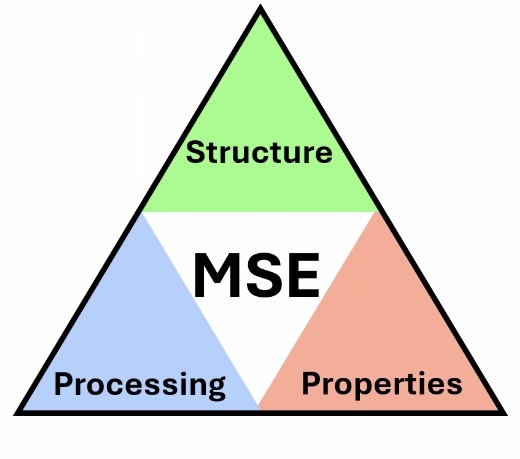
Two days ago I was on a Zoom call with a university about their Materials Science and Engineering department, and it made me rethink what I knew about the field. The woman associated with the school mentioned the MSE triangle and that any MSE class I will take will guarantee to mention this. I had heard of this triangle before but her discussion made me rethink what I knew about Materials Science and Engineering.
Structure, Processing, and Properties
MSE studies how structure, processing, and properties of materials are related. Structure describes how atoms and molecules are arranged, from the microscopic crystal lattice to larger grain patterns. It determines how strong, flexible, or conductive a material can be. Processing refers to the methods used to shape, treat, or manufacture materials such as heat-treating steel, casting metals, or 3D printing polymers. These processes directly influence the structure, whether by altering grain size, creating new phases, or aligning fibers. Finally, properties are the measurable characteristics we rely on (strength, toughness, conductivity, corrosion resistance) and they emerge from the interplay of structure and processing. The beauty of the triangle is that no corner exists in isolation. Change the processing, and you alter the structure; shift the structure, and you change the properties. This interconnected framework guides scientists and engineers in designing materials for everything.
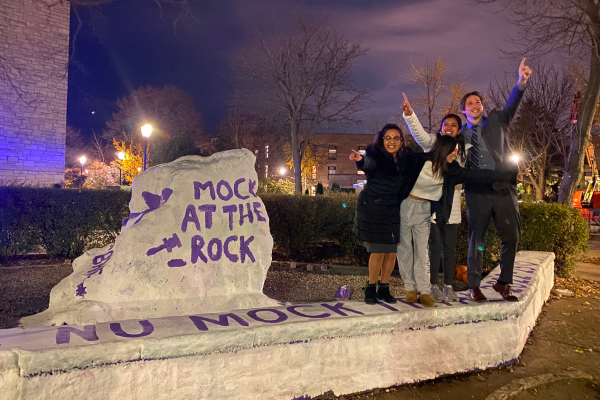
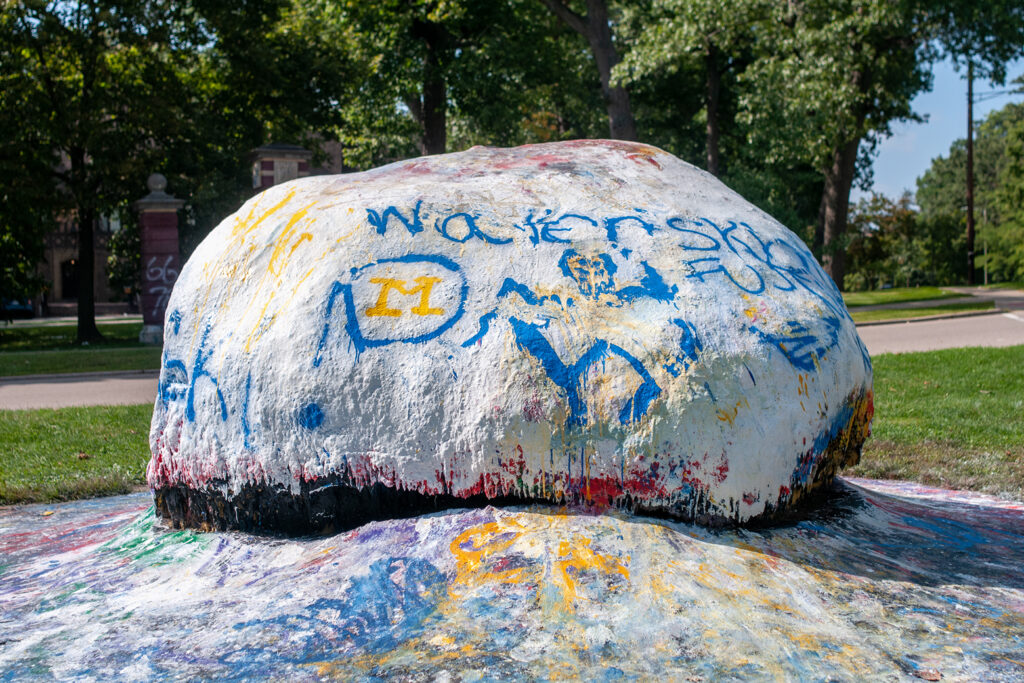
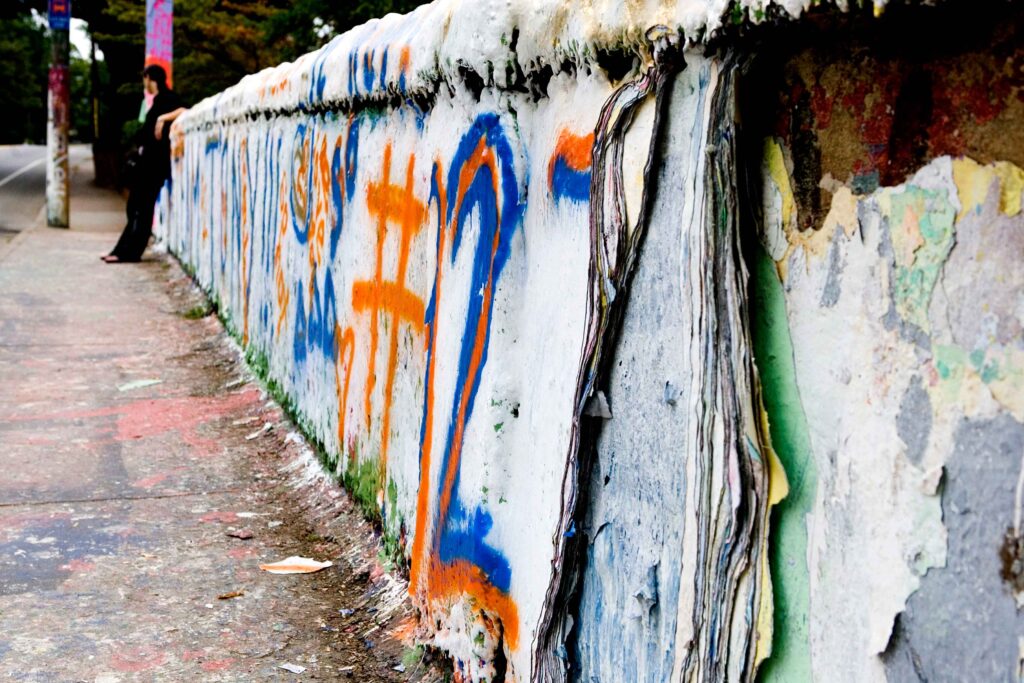
This year I am a senior in high school and am deep into the college admission process. All of these universities have unique traditions, and one I find very interesting is painting! At Duke, every first-year student leaves their mark by painting the East Campus Bridge during orientation, while at Northwestern, student groups “guard” The Rock for 24 hours before layering on their message. UVA’s Beta Bridge is one of the most visible forums on campus, where paint layers pile up daily with everything from sports cheers to memorials. At Michigan, the Ann Arbor Rock has been repainted so many times since the 1950s that it’s practically a geological formation in its own right.
The bridge painting for Duke is a kick-off activity of Orientation Week for incoming-first year students. (Picture Source: https://today.duke.edu/2012/08/ecampusbridge)
Northwestern undergrads often “guard” the rock for 24 hours to claim the right to paint it next. Picture Source: (https://www.northwestern.edu/about/history/the-rock.html)
UVA’s Beta Bridge often has announcements for campus events, current affairs bulletins, club member recruitments, commemorations of horrific world events, cheers for UVA athletic teams, and so on. (Picture Source: https://discovercharlottesville.com/listings/beta-bridge/)
Michigan’s Rock was originally painted gray, but has since been continuously painted over by students and other members of the community looking to make their (temporary) mark. (Picture Source: https://www.michigandaily.com/news/campus-life/a-campus-tradition-painting-the-rock/)
From a materials science perspective, these traditions are more than just campus fun. Each new coat of paint adds a polymer-based layer, creating a stratified record of pigments, binders, and fillers that interact over time through adhesion, diffusion, and weathering. Environmental exposure (UV radiation, humidity, freeze–thaw cycles) induces degradation, causing chalking, flaking, or microcracking that can expose older layers beneath. The constant repainting also creates a multilayer composite structure, sometimes several inches thick, with mechanical properties similar to laminates: stiff yet brittle, prone to delamination under stress. These campus traditions thus accidently generate living laboratories of applied materials science, where students walking past a rock or bridge are witnessing the durability, failure, and layered complexity of everyday polymers in action.
Here is a close-up of the layers of paint from the Northwestern Rock. (Picture Source: https://evanstonroundtable.com/2021/05/28/northwestern-rock-chipped-and-damaged-for-unconfirmed-reasons/)
These are the layers of paint from the UVA Beta Bridge. (Picture Source: https://news.virginia.edu/content/painting-beta-bridge-tradition-expression)